
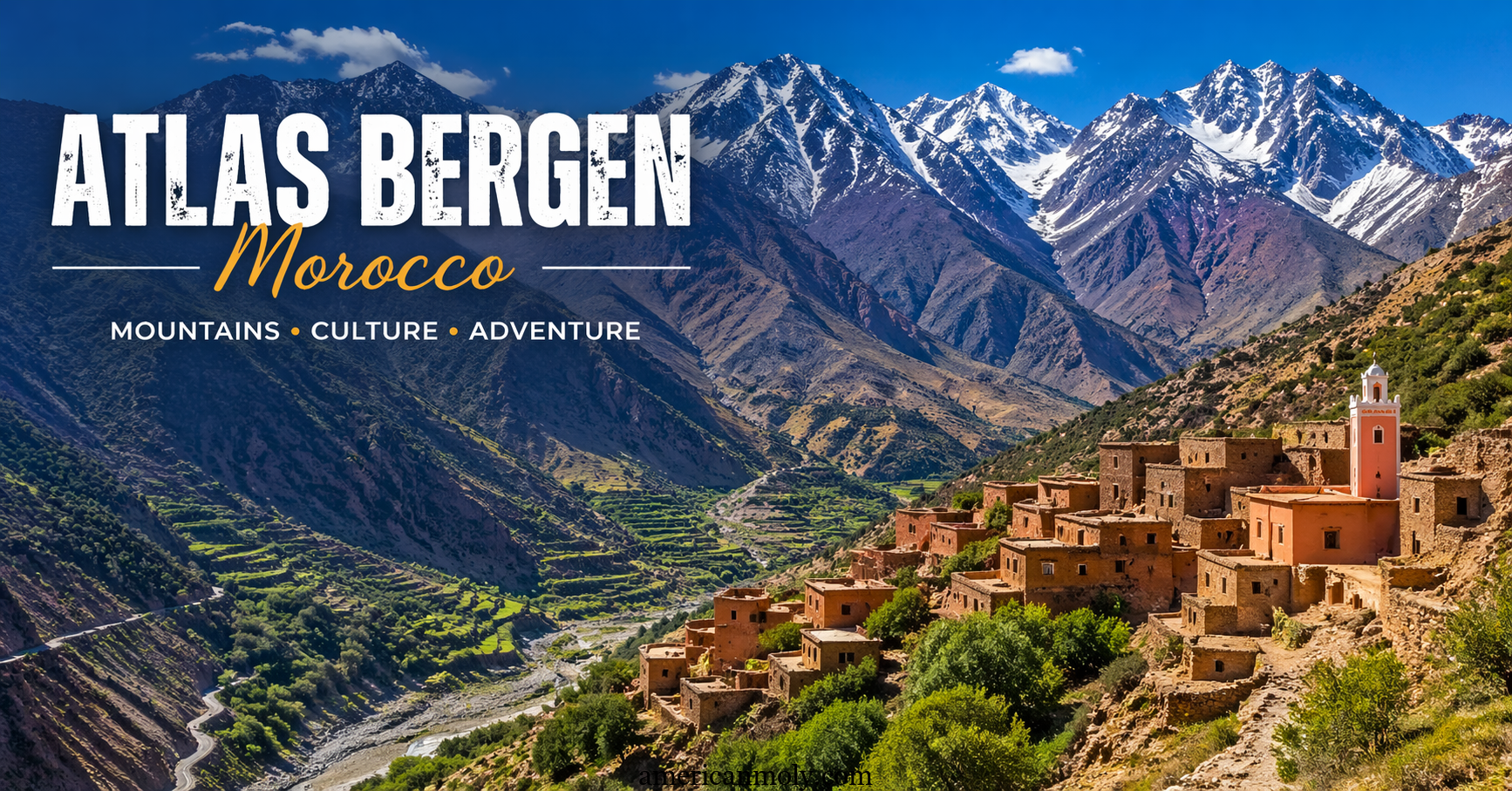
Atlas Bergen is one of the most breathtaking mountain regions in North Africa, attracting travellers who love nature, adventure, and cultural discovery. Stretching across Morocco, Algeria, and Tunisia, this vast mountain system offers dramatic scenery, from snow-covered peaks to dry desert edges.
Morocco holds the most popular and visited part of Atlas Bergen, where the landscape changes rapidly within short distances. Travellers can move from green valleys and cedar forests to rocky mountains and even the edge of the Sahara Desert. This unique contrast makes Atlas Bergen one of the most visually diverse regions in the world.Whether someone wants trekking, photography, or cultural exploration, Atlas Bergen delivers an unforgettable experience.
Geographic Importance of Atlas Bergen
Atlas Bergen is not only beautiful but also geographically significant. The mountain range stretches for more than 2,400 kilometres and acts as a natural divider between two very different climates.
On one side, the mountains protect Mediterranean regions with moderate rainfall and fertile land. On the other side, they separate the harsh desert climate of the Sahara. This natural barrier influences weather patterns, water flow, and biodiversity across North Africa.The mountains also support rivers that supply water to nearby villages and farming areas. Without Atlas Bergen, many regions in Morocco would struggle to maintain agriculture and daily life.The High Atlas region stands out as the most important part of the system. It contains the highest peaks, deep valleys, and some of the most dramatic scenery in North Africa.
High Atlas Heart of Atlas Bergen
The High Atlas forms the central highlight of Atlas Bergen, rising sharply from the surrounding plains and creating a powerful visual contrast with the lowlands. At its centre stands Jbel Toubkal, reaching 4,167 metres and drawing trekkers from around the world.
This iconic peak sits within Toubkal National Park, a protected area that attracts thousands of visitors every year. The High Atlas divides into three main sections: the western region near Marrakech, the rugged central High Atlas, and the remote eastern High Atlas. Each section offers a distinct trekking experience, with the western area providing easier access and the eastern landscapes delivering a more isolated and untouched adventure.
Trekking in Atlas Bergen
Trekking in Atlas Bergen offers a mix of adventure, natural beauty, and cultural interaction. Trails pass through valleys, rocky paths, rivers, and traditional villages.One of the most popular trekking experiences is the climb to Jbel Toubkal. Although it does not require technical climbing skills, it still challenges hikers due to altitude and terrain. Most treks take two to three days and reward climbers with panoramic views of the surrounding mountains.
Spring is the best season for trekking because the weather remains stable and the valleys turn green. In winter, the region becomes snowy and more challenging, requiring proper equipment such as crampons and warm gear.Every trail in Atlas Bergen offers a different experience, making it suitable for both beginners and experienced hikers.
Berber Culture in Atlas Bergen
Atlas Bergen is home to the Berber people, one of the oldest indigenous communities in North Africa. These communities have lived in the mountains for centuries and maintain strong cultural traditions.Berber villages are scattered across valleys and hillsides. Their homes are often built from stone and clay, blending naturally into the landscape. Life in these villages follows a simple rhythm based on farming, livestock, and seasonal changes.
Travellers visiting these villages experience warm hospitality. Locals often welcome guests with traditional food, tea, and stories about mountain life. This cultural exchange adds deep value to any journey in Atlas Bergen.Traditional farming methods also play an important role in survival. Farmers adapt to dry and mountainous conditions by using smart irrigation and land-use techniques.
Climate and Natural Diversity
Atlas Bergen features a wide range of climates due to its changing elevation and geography.Northern and western areas experience a Mediterranean climate with mild temperatures and forests filled with pine, cedar, and oak trees. These regions remain green and fertile throughout much of the year.Southern regions, however, become more arid and dry as they approach the Sahara Desert.
This creates a striking contrast where green valleys slowly transition into desert landscapes.At higher altitudes, snow becomes common during winter. Some areas even support winter sports like skiing, especially in locations such as Oukaïmeden.This diversity makes Atlas Bergen one of the most ecologically rich mountain systems in the world.
Hidden Gems of Atlas Bergen
Beyond its well-known trekking routes, Atlas Bergen reveals a wealth of natural and cultural treasures waiting to be explored. One of the most iconic sites is Aït Benhaddou, a UNESCO-listed village famous for its ancient clay architecture and appearances in international films.
The region also features breathtaking landscapes such as the Dadès Valley, known for its dramatic rock formations, and the Todra Gorge, where towering canyon walls create a striking natural corridor. In addition, remote Berber settlements offer a glimpse into traditional mountain life, while fossil-rich areas highlight the region’s deep geological history. Together, these destinations show that Atlas Bergen offers far more than mountains it delivers a rich blend of history, culture, and natural wonder.
Why Adventure Travellers Love Atlas Bergen
Atlas Bergen attracts adventure lovers because it offers both challenge and beauty in one destination. Travellers can hike mountains, explore valleys, and experience traditional village life all within a single journey.
The region is also easy to access from major cities like Marrakech, making it convenient for short and long trips. At the same time, remote areas provide peace and isolation for those who want to escape busy urban life.Photography enthusiasts also find endless opportunities, as every direction offers a new landscape snow peaks, green valleys, rocky cliffs, or desert edges.
Atlas Bergen Travel Overview Table
| Feature | Description |
| Location | Atlas Bergen stretches across Morocco, Algeria, and Tunisia in North Africa. |
| Highest Peak | Jbel Toubkal at 4,167 metres. |
| Famous Landmark | Aït Benhaddou, known for its traditional clay architecture. |
| Best Time to Visit | Spring (April–May) and autumn offer the best weather for trekking and exploration. |
| Popular Activities | Trekking, hiking, cultural tours, photography, and exploring valleys like Dadès Valley. |
| Climate | Varies from Mediterranean in the north to semi-arid conditions in southern regions. |
| Cultural Experience | Visitors can explore traditional Berber villages and experience local hospitality. |
Conclusion
Atlas Bergen stands as one of the most diverse and beautiful mountain regions in North Africa. It combines natural landscapes, rich culture, and unforgettable adventure experiences.
From the towering peaks of the High Atlas to the peaceful Berber villages hidden in valleys, every part of Atlas Bergen tells a unique story. Whether you are trekking, exploring, or simply enjoying nature, this region offers something truly special.
FAQs
What is Atlas Bergen known for?
Atlas Bergen is known for its stunning mountains, rich culture, and diverse landscapes across North Africa.
Is Aït Benhaddou worth visiting?
Yes, it is famous for its historic architecture and has appeared in many international films.
What are the top natural attractions in Atlas Bergen?
Popular spots include the Dadès Valley and Todra Gorge.
Can beginners explore Atlas Bergen?
Yes, there are many easy routes and cultural sites suitable for beginners.
What makes Atlas Bergen unique?
It offers a mix of mountains, history, culture, and geological wonders in one region.











Leave a Reply